
B18 · Port & Waterway
Ports and docks stainless steel plates: 2205/304 selection and 3 item lists
In ports and docks, we have organized three parts using stainless steel: commonly used 2205 / 304 / 316L, with thickness ranging from 1.5–40 mm.
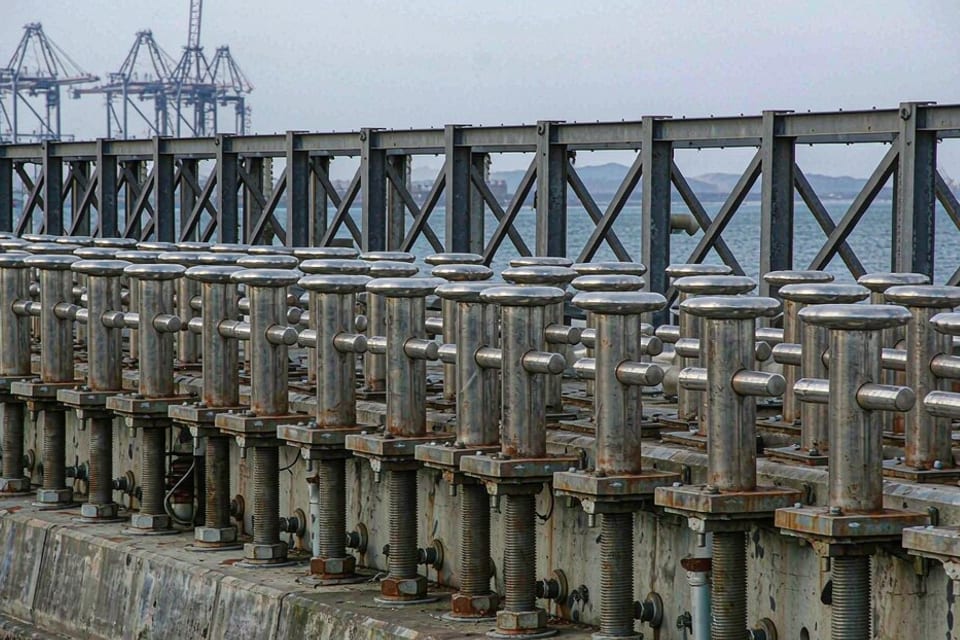
List of parts and materials by location
| Location / Part | Recommended grade | Specs / Thickness | Surface | Main Failure Modes | Reference Standards |
|---|---|---|---|---|---|
| Grapple Body/Gripper Blade/Buffer Plate | 2205/S31635 Dual-phase steel/High-alloy Martensitic HRC≥52 | Plate 6-30mm | Surface Finish/Welding | Seawater Salt Spray+Mineral Slurry Erosion+Impact; Low temperature conditions require -40℃ impact toughness | GB/T 20878;ASTM A240;GB/T 3280 |
| Unloading Quay Conveyor/Conveyor Flanges/Dust Collectors | Molybdenum Martensitic Wear-Resistant Stainless Steel / Duplex Steel / Wear-Resistant Composite Plate | 8–40mm | Weld Overlay / Composite | High-Speed Scrubbing + Corrosion in Minerals/Fuels | GB/T 3280; JB/T Harbor Machinery Standards |
| Harbor Conveyor Roller / Frame / Walkway Grids | 304/316L/2205 | 1.5–6mm | 2B / Non-Slip | Ocean Atmosphere + Salt Spray + Wear | GB/T 3280;ASTM A240 |
Table Inside isConfiguration. Parts of the same material can change from 304 to 316L or 2205 depending on the medium, temperature, and welding method —— Explain usage conditions instead of specifying grades.
Material Considerations
- The most common grades in this industry are 2205 (2), 304 (1), and 316L (1) —— Parentheses indicate affected areas, useful for quoting and material ordering.
- Consider hardness for wear parts (edges, liners, conveyors) (3/3 hits).
- Chlorides and salts are the most common corrosion sources (pitting, crevice corrosion) (2/3 hits).
- Thickness range 1.5–40 mm: Thin plates are often formed pieces (consider bending rebound and deep drawing cracking), thick plates are often welded structures (consider heat input and sensitization).
Common Issues
What stainless steel is most used for ports and harbors?
Total stock count, most frequent is 2205 (2), 304 (1), 316L (1). Specific parts still need to be based on medium and temperature, like stainless countertops contacting salt water should switch from 304 to 316L.
Which part is most prone to problems?
Typical failure description: Tooth/blade/clearance plate + seawater salt spray + mineral erosion + impact; low-temperature conditions require -40℃ impact toughness; recommended grade 2205/S31635 duplex stainless steel/high-alloy martensitic, HRC ≥ 52, specifications clearance plates 6–30mm. This type of condition recommends specifying medium concentration, temperature, and cleaning method during the design phase.
What thickness should I select?
Thickness range in the list is 1.5–40 mm. For thin plates, consider bending and surface finish; for thick plates, welding and structural strength. Values may vary by manufacturer for the same location, review your drawing or operating conditions.
Related Materials and Adjacent Industries
Applications3
Thickness1.5–40mm