
S3 · Sanitary Valves
Sanitary Diaphragm Valves/Cleanroom Valves (316L Media and Boundary List)
List the media, grades, and boundary conditions for sanitary diaphragm valves/cleanroom valves: 4 typical components/processes, including recommended grades, specifications, failure reasons, and standards.
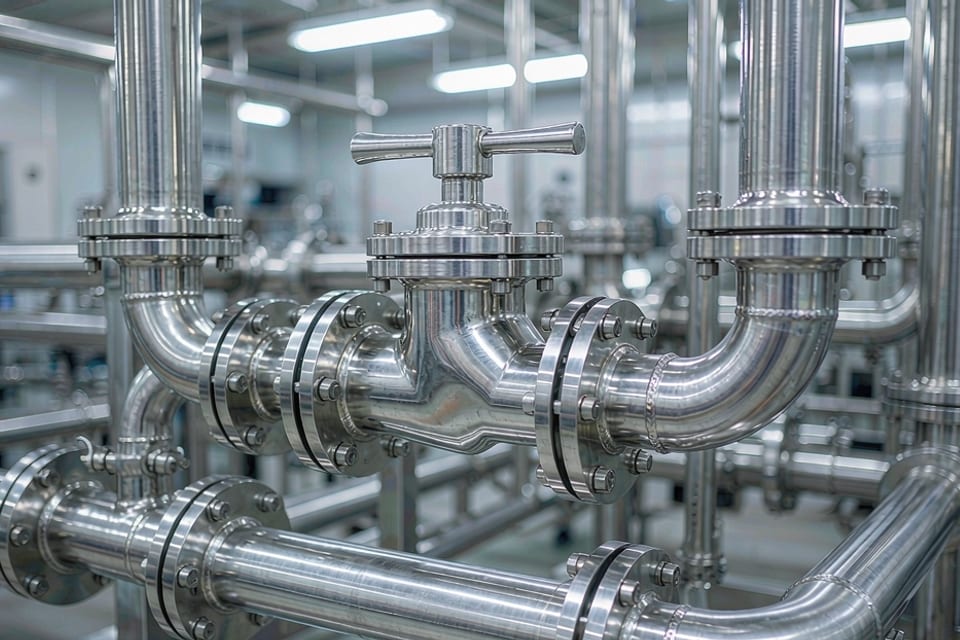
List of parts and selection criteria
| Part / Component | Recommended Grade | Size / Thickness | Surface | Main Failure Modes | Reference Standards |
|---|---|---|---|---|---|
| BioClean sanitary diaphragm valve | 316L(EN1.4409 CF3M/EN1.4404) | DN65–DN80; 0–10bar; -40~210℃ | Ra≤0.5μm(SF1);Ra≤0.375μm(SF4) | Membrane aging/ dead legs; CIP/SIP must be fully drained | ASME BPE;3-A;EHEDG;FDA |
| Purified water contact diaphragm valve | 316L(ASME BPE) | Tolerates 130℃; installation angle meets drainage requirements | Electropolished Ra≤0.4–0.5μm | Hygienic diaphragm valve for purified water contact; ASME BPE 316L certified valve body | China GMP; ASME BPE |
| ASME BPE certified diaphragm seal system | 316L(1.4435) | Biological process contacting parts | Standard Ra0.76μm (30μin); BPE certified optional Ra0.38μm (15μin) electropolished | Iron content <1%; welding delta-ferrite over 3% significantly affects corrosion resistance | ASME BPE;ASTM A249/S7 |
| Sampling valve/bucket bottom valve/CIP spray ball | 316L | 1/4″–2″; zero dead legs | Ra≤0.375–0.5μm | Representative sampling and cleaning coverage are core functions. Not corrosion. | ASME BPE;3-A |
Table showsStandard Configuration. Same part can use 304, 316L or 2205 in different media, temperatures, and welding methods —— Explain usage conditions instead of specifying grades.
Material selection tips
- Most common grade is 316L (4) —— Numbers in parentheses indicate affected areas for quoting and material preparation.
- Frequent cleaning and disinfection increase risk of crevice and intergranular corrosion (2/4 hits).
- Thickness range: 0–210 mm. Thin plates are formed parts (consider bending rebound and deep drawing cracks), thick plates are welded structures (consider heat input and sensitization).
Common issues
Hygienic diaphragm valve/clean valves: Which stainless steel is used most for ASME BPE, Ra, and temperature boundaries?
Out of 4 areas in total, grade 316L appears most frequently (4 hits). Specific to a part depends on media and temperature, e.g., stainless countertops need switching from 304 to 316L when exposed to saltwater.
Which parts are prone to problems?
Typical failure is ASME BPE-certified diaphragm seals: Ferrite content <1%; delta-ferrite in welds >3% significantly affects corrosion resistance; recommended grade 316L (1.4435), suitable for bio-processing contact pieces. For such conditions, specify media concentration, temperature, and cleaning methods at the design stage.
What thickness is needed?
Thickness range: 0–210 mm. Thin plates consider forming and surface quality, thick plates look at welding strength and structural integrity; different manufacturers may use different values based on your drawings or operating conditions.
Related materials and adjacent industries
316LMaterial specificationsStainless fasteners: A2-70/A4-70/A4-80/D series and latest standardsStainless FastenersCarbon steel flanges for seawater desalination: 2205/2507 pressure-temperature-corrosion boundaryDuplex Flange & DesalinationNitrogen embrittlement and chloride ion stress corrosion cracking: temperature-time-concentration boundarySensitization & Chloride SCC