
C21 · Furniture
Stainless Steel Sheets for Furniture Manufacturing: 304/201 Selection and 4 Part Lists
In furniture manufacturing, we have organized four parts using stainless steel: commonly used 304 / 201 / 304L, with thickness ranging from 0.8–5 mm.
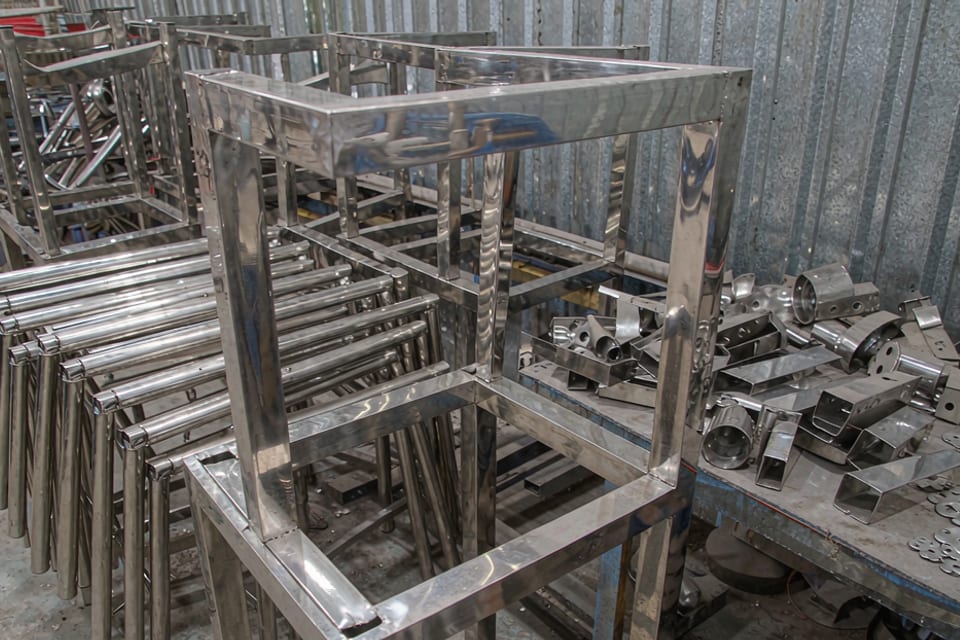
Four parts and material list
| Part / Component | Recommended designation | Size / Thickness | Surface | Table failures | Standards |
|---|---|---|---|---|---|
| Hinges for furniture | 304/201 | 1.8–5mm | Buff/Dome/Glitter | Repetitive opening and closing wear + sweat + cleaning agents; ASS 500h grade 10 | QB/T 2189;GB/T 3325;QB/T 3827 |
| Three-section slides | 304/201 | 1.0–2.0mm | 2B/Gold plating | Repeated pulling and wear + structural deformation; load capacity 200N; ASS 500h 10 | QB/T 2454;QB/T 3827;QB/T 3832 |
| Handles/lock panels | 304/201 | 0.8–2.0mm | Buff/Dome/Finger-resistant | Frequent touch + sweat + cleaning agents | GB/T 3325;QB/T 3827 |
| Stainless cabinet bodies/countertops | 304L/316L | 0.8–3.0mm | 2B/Buff/Raised patterns | Humidity + food contact + cleaning agents; antibacterial rate 99.9% | GB/T 3280;GB 4806.9;QB/T 4371 |
Table withinStandard configurationMaterial selection
Common stainless steel used in furniture industry?
- Top 4 parts: 304 (3), 201 (3), 304L (1).
- Consider hardness for wear components.
- High cleaning and disinfection increase corrosion risk.
- Thickness range: 0.8–5 mm.
Thicker plates are welded structures, thinner ones formed pieces.
Common issues
Which stainless steel is used most in furniture industry?
Top parts by count: 304 (3), 201 (3), 304L (1).
Specific part depends on media and temperature, e.g., saltwater countertop requires 316L instead of 304.
Which components are prone to failure?
Typical example: "Three-section slider" - repeated pulling wear + weight deformation; strength 200N; ASS 500h grade 10; recommended 304/201, size 1.0–2.0mm. For this condition, specify media concentration, temperature, and cleaning method in design.
What thickness is needed?
201Thickness range: 0.8–5 mm. Thin plates consider forming and surface quality, thick ones welding strength; different manufacturers may have varying values, review your drawings or conditions.304Related materials and adjacent industries304LMaterial and specifications316LMaterial and specificationsAgricultural food processingFood ProcessingFood manufacturingFood ManufacturingBeer, beverage, and refined tea manufacturingBeverage & Brewing
Applications4
Thickness0.8–5mm