
C32 · Non-ferrous Metallurgy
Stainless Steel Plates for Metallics and Rolling Industries: 904L/2205 Selection and 3 Item Lists
In metallics and rolling industries, we have organized three stainless steel parts: commonly used 904L / 2205 / 254SMO with thickness ranging from 2–50 mm.
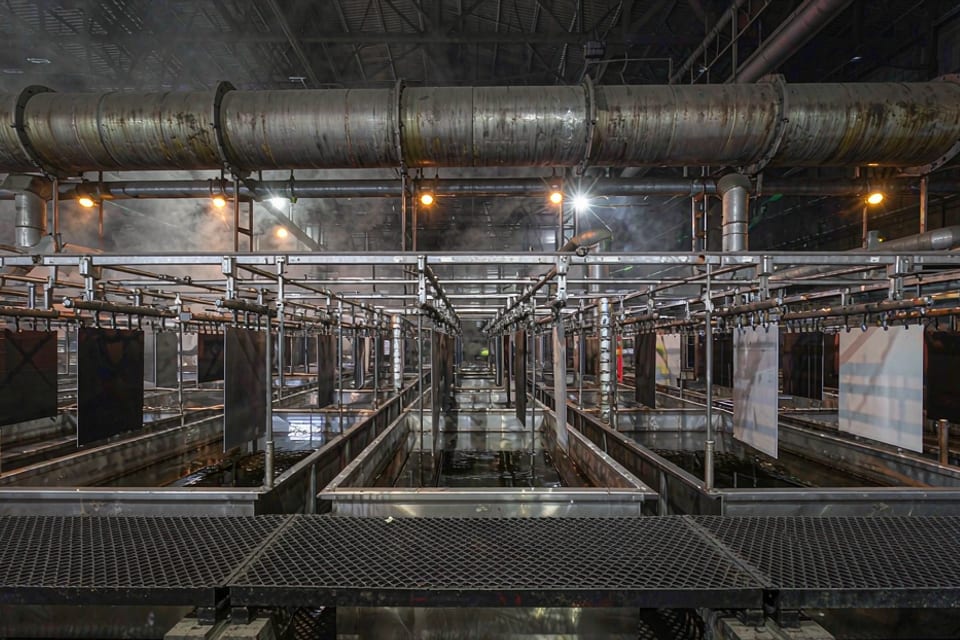
3 parts and material list
| Part / Component | Recommended grade | Specification / Thickness | Surface | Main failure modes | Reference standards |
|---|---|---|---|---|---|
| Wet heap leaching tanks/pipes/valves | 904L/254SMO/2205 | Cassette 3-12mm; pipe 2-8mm | 2B/Acid washing | H₂SO₄ 100g/L+95℃+Cl⁻≤50ppm+redox 350mV→uniform corrosion+spotting; 316L fails quickly in this condition (case: cassette 904L qualified, pipe/valve used as 316, leakage around 3 weeks) | ASTM A240;GB/T 3280 |
| Electrolytic/electrodeposition tanks lining/electrodes | 316L/2205/904L | 2–8mm | 2B/Acid washing | Acid electrolyte+current+Cl⁻→spotting/gap corrosion | ASTM A240; YS/T smelting equipment standards |
| Metallic melting crucibles/tank linings | 310S/heat-resistant castings | 10–50mm | Cast surface/processed surface | High temperature+melted metal erosion+thermal fatigue | GB/T 8492;GB/T 3280 |
Here areStandard configurationsSpecify usage conditions for 304 to 316L or 2205 —— it's easier to explain than specifying grades directly.
Material Points
- The most common grades in this industry are 904L (2), 2205 (2), and 254SMO (1) —— the numbers in parentheses indicate the number of affected areas, which can serve as a starting point for quoting and material procurement.
- Chloride ions and salt are the most common sources of corrosion (spotting, pitting corrosion) (2/3 hits).
- Minimum thickness 2–50 mm: Thin plates are mostly formed parts (considering bend rebound and deep drawing cracking), thick plates are mostly welded structures (considering heat input and sensitization).
Common questions
What stainless steel is most used inMetallic non-ferrous metallurgy and rolling industry?
Total statistics: 904L (2), 2205 (2), 254SMO (1) appear most frequently. Specific to a part depends on medium and temperature, e.g., for stainless countertops, switch from 304 to 316L if exposed to saltwater.
What parts are most prone to issues?
By failure description, typical is "WetCupellation Furnace/Pipe/Valves": H₂SO₄ 100g/L+95℃+Cl⁻≤50ppm+redox 350mV→uniform corrosion+pitting; 316L fails quickly in this condition (case: vessel 904L qualified, pipe/valve misused 316, leaked after about 3 weeks); recommended grades 904L/254SMO/2205, thickness range 3–12mm for vessels; 2–8mm for pipes. This condition suggests specifying media concentration, temperature, and cleaning method in design.
What thickness do I need?
Thickness ranges are 2–50 mm., Consider formability and surface quality for thin plates., Weldability and structural strength for thick plates., Values may vary based on drawings or conditions., Recheck as needed.
Related materials and adjacent industries
Applications3