
C43 · Repair & Maintenance
Stainless Steel Plates for Metal Products, Machinery and Equipment Repair Industry: 316L/2205 Selection and 3 Item Lists
For metal products, machinery and equipment repair industry we have organized three stainless steel parts: commonly used 316L / 2205 / 304, with thickness ranging from 0.8–10 mm.
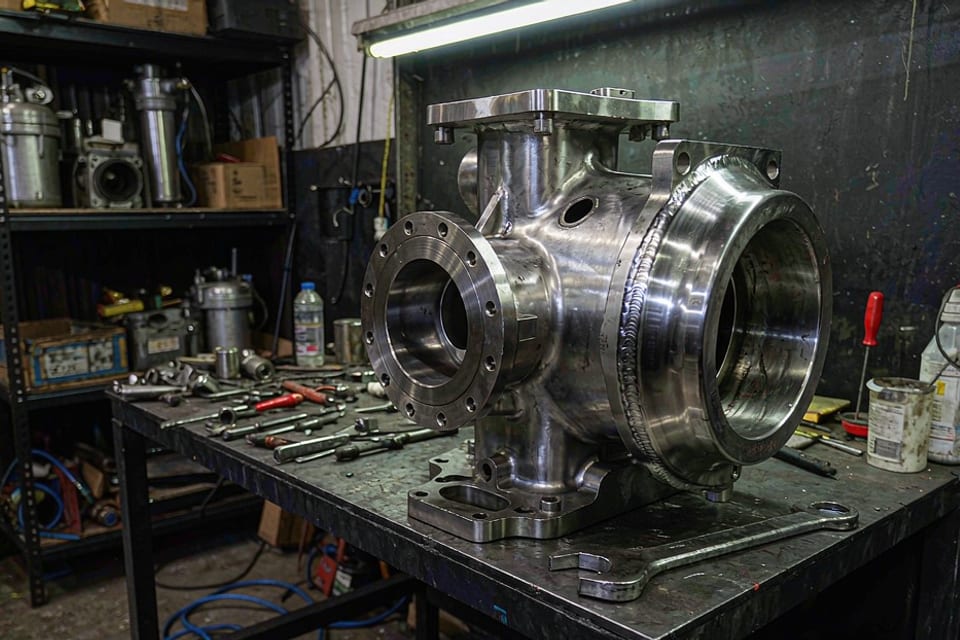
Three Parts and Material Lists
| Part / Component | Recommended Grade | Specifications / Thickness | Surface | Main failure modes | Standards |
|---|---|---|---|---|---|
| Stainless steel welding materials/wire for repair | 304/316L/2205 | φ0.8–4.0mm | Lustrous | Matched to base metal + dilution + porosity | GB/T 983;GB/T 29713 |
| Repair/remanufacture pump valve overflows/axles/spindles | 316L/2205/420 | By original part | Processing/fusion/spraying | Original corrosion/marking strength | By original standards; NB/T 47014 |
| Contact piece acid washing/denitration services | 316L/acid-resistant plastic linings | 2–10mm | Acid washing/denitration | Acid wash HNO₃/HF+Cl⁻ corrosion | ASTM A380;GB/T 25146 |
Table includesStandard configurationMaterial selection
Consider usage conditions instead of grades
- Most common grades in this industry are 316L (3), 2205 (2), and 304 (1) — parentheses indicate the number of parts involved, useful for quoting and material ordering.
- Thickness range 0.8–10 mm: Thin plates are mostly formed pieces (consider bending rebound and deep drawing cracking), thick plates are mostly welded structures (consider heat input and sensitization).
Frequently asked questions
What stainless steel is used most in metalworking, machinery and equipment repair?
By total pages, the top 3 are: 316L (3), 2205 (2), and 304 (1). For specific parts, check media and temperature, e.g., stainless countertops need to switch from 304 to 316L when exposed to saltwater.
Which part is the easiest to go wrong?
Specify condition in design phase, Recommended grade 316L or acid-resistant plastic liner, Size 2–10mm, Medium concentration, temperature, cleaning method
What thickness should I select?
Thickness range in the list is 0.8–10 mm. For thin plates, consider bending and surface finish; for thick plates, welding and structural strength. Values may vary by manufacturer for the same part, review your drawing or operating conditions.
Related materials and adjacent industries
Applications3