
C35 · Special Equipment
Special Stainless Steel Plates for Mining/Engineering/Waste Treatment Equipment: S21800/316L Selection and 3 Part Lists
For Mining/Engineering/Waste Treatment Equipment, We Have Compiled Three Parts Using Stainless Steel: Commonly Used S21800 / 316L / 254SMO, with Thicknesses from 2-30 mm.
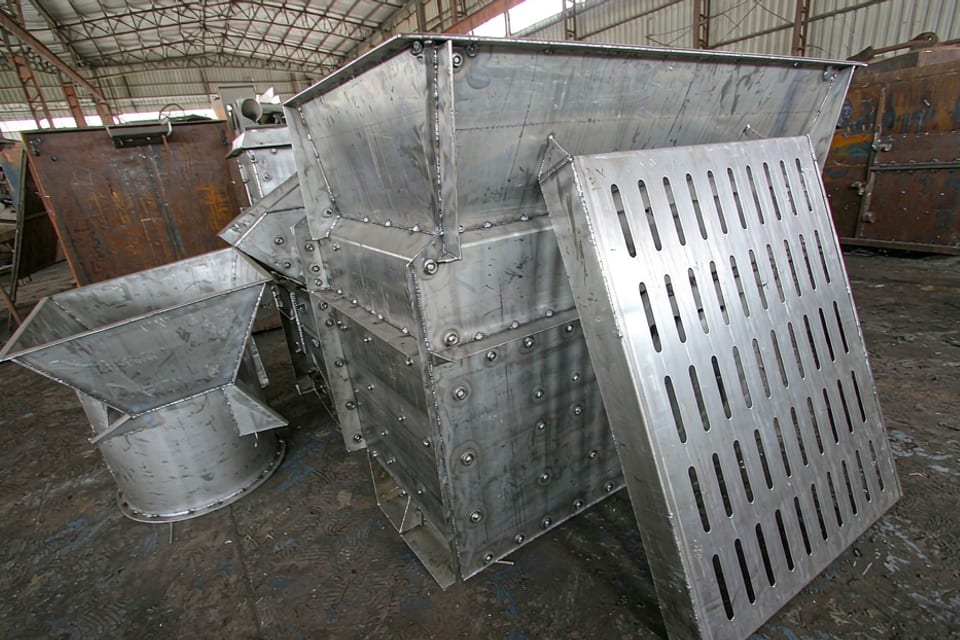
Three Parts and Material Lists
| Part / Component | Recommended Grade | Specifications / Thickness | Surface | Main failure modes | Reference standards |
|---|---|---|---|---|---|
| Mine screen plates | S21800 (Nitronic 60)/High-Manganese Austenitic | 3–20mm | 2B/Grounding surface | Mineral erosion + Cl⁻ corrosion + impact; S21800 yield strength ≥345MPa (typical 400MPa), wear resistance superior to 304 | ASTM A276/A479;GB/T 3280 |
| Chute liners/Conveyor trough linings | S21800/Dual-phase steel/Wear-resistant composite plate | 6–30mm | 2B/Electrodeposition | Mineral erosion + corrosion + impact | ASTM A276;GB/T 3280 |
| Environmental equipment desulfurization / dust removal contact pieces | 316L/2205/254SMO | 2–10mm | 2B/Acid washing | Acidic flue gas + Cl⁻ + wear | ASTM A240;GB/T 3280 |
Table showsStandard configuration.Same part may be changed from 304 to 316L or 2205 depending on usage conditions, which is more convenient than specifying grades.
Material selection
- Most common grades in this industry are S21800 (2), 316L (1), and 254SMO (1) —— parentheses indicate the number of affected areas, useful for quoting and material procurement.
- Consider hardness for wear parts (edges, liners, conveyors) beyond just corrosion resistance (3/3 hits).
- Common sources of corrosion are chloride ions and salts (pitting, crevice corrosion) (2/3 hits).
- Thickness range 2–30 mm: thin plates are mostly formed pieces (consider bending rebound and deep drawing cracking), thick plates are mostly welded structures (consider heat input and sensitization).
Common issues
Which stainless steel is used most in specialized equipment manufacturing for mining, engineering, or environmental applications?
How many parts are we looking at here?
What's the most common part?
Which type of area is prone to issues?
For thickness, what size should it be?
Thickness range in the list is 2–30 mm. For thin sections, consider bending and surface finish; for thick sections, welding and structural strength. Values may vary by manufacturer for the same location, review your drawing or operating conditions.
Related materials and adjacent industries
Applications3