
S6 · UHP 316L for Semiconductor
Semiconductor UHP 316L (Media and Boundary List for 316L/304L)
List the media, grades, and boundary conditions related to Semiconductor UHP 316L: 4 Typical Components/Conditions, including recommended grades, specifications, failure reasons, and standards.
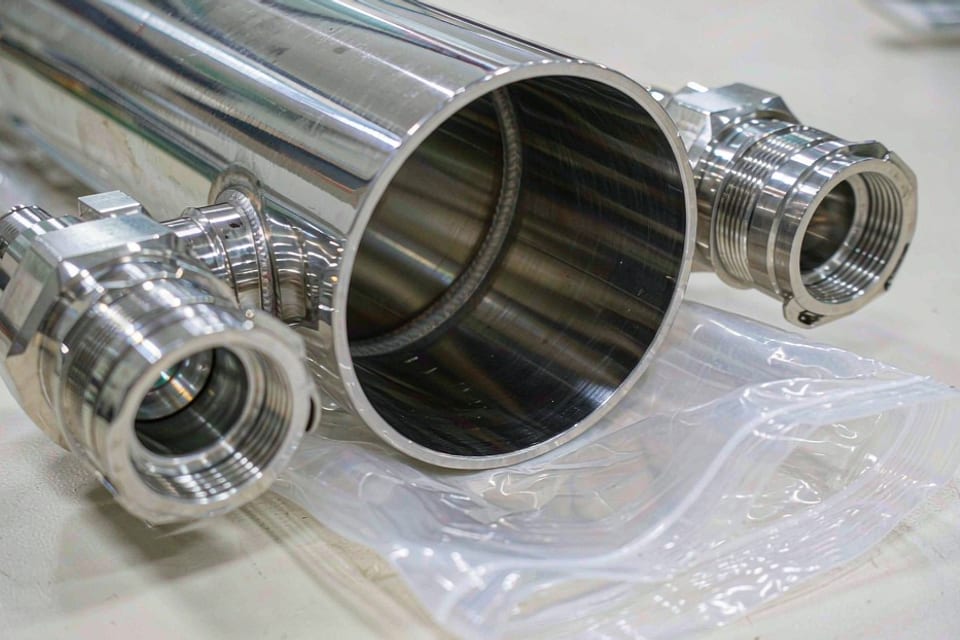
Four Parts and Material List
| Part / Component | Recommended Grade | Specifications / Thickness | Surface | Main failure modes | Reference standards |
|---|---|---|---|---|---|
| UHP gas conveying pipe | 316L VIM-VAR | S 0.005–0.010%;O≤7ppm;InclusionsASTM E45 A/B/C/D fine series ≤0.5 grade | Mechanical polishing Ra≤0.25μm→electrolytic Ra≤0.13μm; high-end Ra≤0.05μm | Particle/metal ion pollution is the main failure; intergranular corrosion/HAZ in welds secondary but not to be ignored | SEMI F20 Grade 5;SEMI F19;SEMI F57 |
| Special gas cabinet valve body/pressure reducing valves/diaphragm valves | 316L VIM-VAR forgings | S≤0.005%;C extremely low | Electropolishing Ra≤0.2μm; no free iron | Seat distance from pipe wall >1D forms stagnant dead zone; corrosive special gases pit erosion | SEMI F20 4.6.2;ASTM A182 |
| CMP/wet electronic chemicals pipelines | 316L EP/PFA/PTFE lining | According to SEMI F20 composition | Ra≤0.2μm | Abrasive wear+strong acids/strong oxidizers+particle retention | SEMI F20;SEMI F57 |
| Vacuum chambers/flanges | 304L/316LVacuum grade | Low vent rate is key, not sulfur/oxygen | 2B/ Electro-polish/Acid wash | Inadequate venting → vacuum drops; leaks during welding | ASTM A240;ISO 3669 |
Table includesStandard configuration.Different parts in various media, temperatures, and welding methods may switch from 304 to 316L or 2205—clearly state usage conditions for easier quoting and material preparation.
Key considerations
- Most common grades are 316L (4), 304L (1)—parentheses indicate affected areas. Use this as a starting point for quotes and materials.
- In acidic media, 316L is just the baseline; higher concentrations and temperatures require 904L or duplex (2/4 hits).
- Thickness range: 0.005–0.01 mm—thin plates are often formed parts (consider bending rebound and deep drawing cracking), thick plates are welded structures (consider heat input and sensitization).
Common issues
Semiconductor UHP 316L: Which stainless steel is used most for SEMI F20's sulfur/oxygen/impurities/Ra limits?
Based on the total of these four areas, 316L (4) and 304L (1) are most common. Specific to a part still depends on media and temperature—e.g., stainless countertops contacting salt water should switch from 304 to 316L.
What parts are most prone to problems?
Based on failure descriptions, typical is "UHP gas conveying pipes": particulate/metal ion contamination is the main failure; intergranular corrosion/HAZ welds are secondary but not to be ignored. Recommended grade 316L VIM-VAR, specs S 0.005–0.010%, O≤7ppm, impurities ASTM E45 A/B/C/D fine series ≤0.5 class. For this condition, specify media concentration, temperature, and cleaning method in the design phase.
What thickness should I choose?
Thickness range in the list is 0.005–0.01 mm. For thin plates, consider formability and surface quality; for thick plates, welding strength and structural integrity. Values may vary by equipment manufacturer for the same part; review your drawing or operating conditions.
Related materials and adjacent industries
316LMaterial specifications304LMaterial & SpecificationsStainless Fasteners: A2-70/A4-70/A4-80/D Series and Latest StandardsStainless FastenersWeld Neck Flanges for Sea Water Desalination: 2205/2507 Pressure-Temperature-Corrosion BoundariesDuplex Flange & DesalinationHygienic Diaphragm Valves/Clean Valves: ASME BPE, Ra, and Temperature BoundariesSanitary Valves